

Ai marketing tools for small business
One of the main issues facing small businesses is marketing. Owners frequently have to work on a tight budget while producing content, managing social media, designing graphics, generating leads, sending emails, analyzing website traffic, and understanding their clientele.
That is being altered by artificial intelligence.
Without having to buy pricey software right away, small businesses may now use free AI marketing solutions to automate monotonous operations, develop content ideas, produce professional visuals, enhance social media marketing, manage customer relationships, and monitor marketing effectiveness.
The secret is to avoid platforms that only give a brief trial and instead select solutions that offer significant value on their free plans.
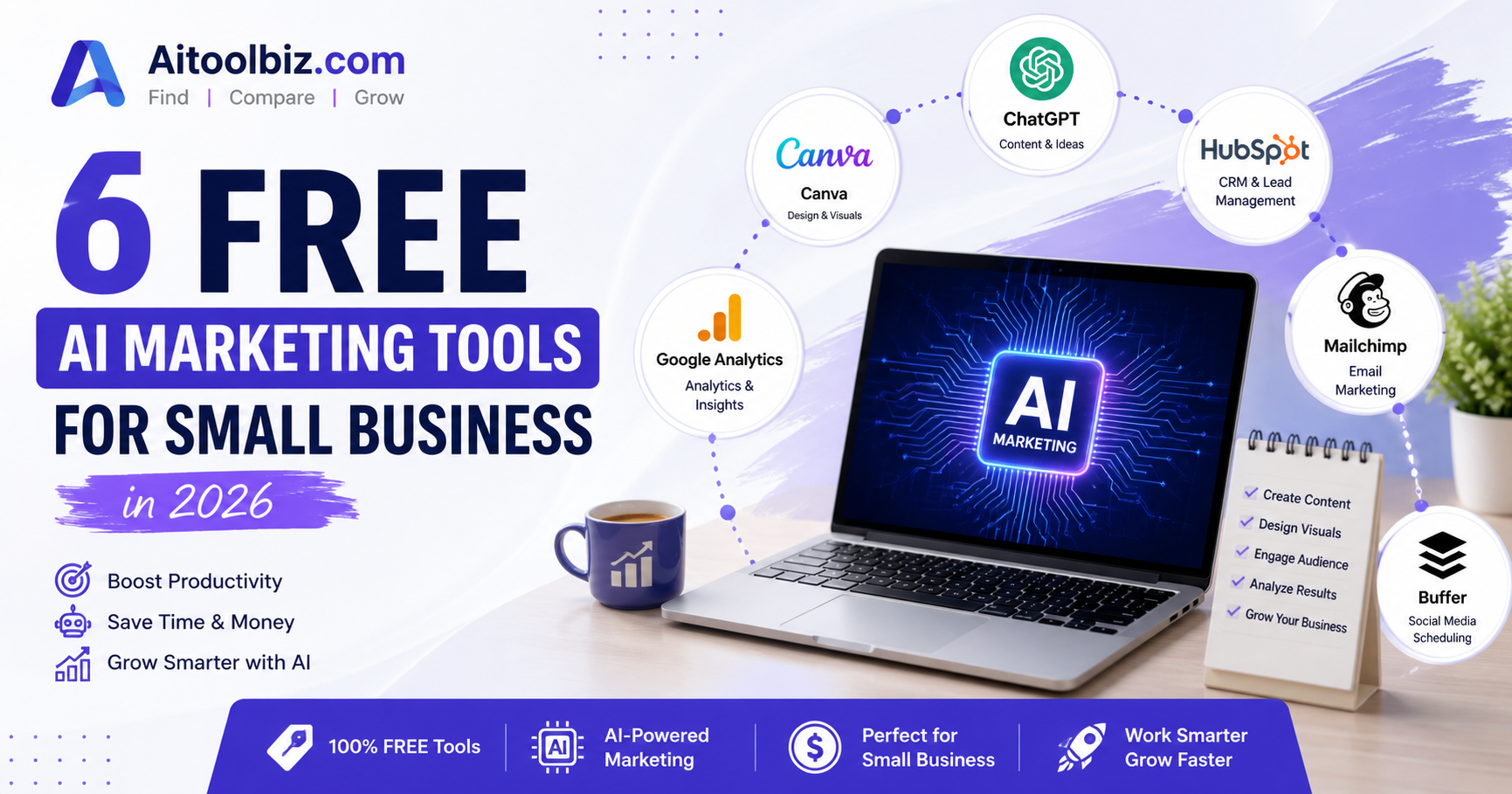
Six free AI marketing tools for small businesses in 2026 are examined in this guide: ChatGPT, Canva, HubSpot, Mailchimp, Buffer, and Google Analytics. Because each tool has a distinct function, companies can integrate multiple tools to create an inexpensive marketing workflow.
Tools like ChatGPT, Canva, HubSpot, Mailchimp, Buffer, and Google Analytics are frequently mentioned in recent study on AI marketing tools as helpful parts of a free or inexpensive small-business marketing stack.
Table of Contents
What Are AI Marketing Tools?
AI marketing solutions are software systems that make use of artificial intelligence to assist companies in completing marketing-related tasks more quickly and effectively.
Depending on the platform, AI can assist with:
- Writing blog posts and social media captions
- Generating marketing ideas
- Creating images and graphics
- Developing email campaigns
- Managing customer information
- Scheduling social media posts
- Analyzing website traffic
- Identifying marketing trends
- Improving advertising copy
- Creating SEO content
- Personalizing customer communications
Efficiency is the greatest benefit for small enterprises.
A business owner can employ a number of AI-powered technologies to do numerous mundane jobs instead of paying separate personnel for writing, design, social media, email marketing, and analytics.
AI shouldn’t, however, totally take the role of human judgment. Businesses that utilize AI for speed and productivity and humans for strategy, brand expertise, fact-checking, and creativity typically see the best outcomes.
1. ChatGPT – Best Free AI Tool for Marketing Content
One of the most useful AI technologies for small enterprises is ChatGPT.
It can serve as a marketing strategist, copywriter, research assistant, content planner, customer service representative, and brainstorming assistant.
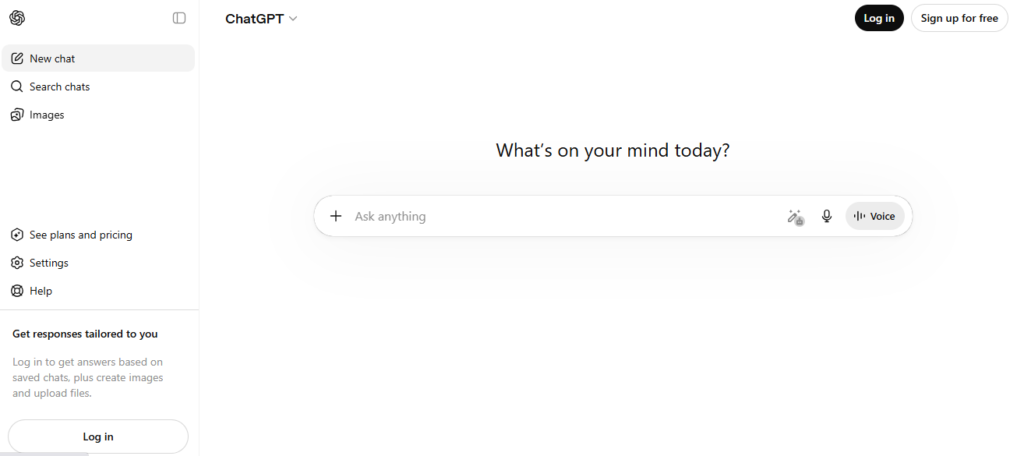
Although use restrictions and accessible features may vary over time, small businesses can use ChatGPT’s free edition for a wide range of marketing tasks.
What Can Small Businesses Use ChatGPT For?
ChatGPT can help create:
- Blog post ideas
- Social media captions
- Email subject lines
- Product descriptions
- Website copy
- Ad copy
- Marketing strategies
- Customer personas
- FAQ questions
- Video scripts
- SEO content outlines
- Newsletter ideas
- Promotional campaigns
For instance, a nearby bakery might request that ChatGPT produce a month’s worth of Instagram content depending on its merchandise, target market, and advertising schedule.
It might be used by an online retailer to create different product descriptions.
It might be used by a consultant to generate ideas for newsletter themes and LinkedIn postings.
Flexibility is the main benefit.
Example Marketing Prompt
A small business owner could enter:
“Create 10 Instagram post ideas for a small fitness studio targeting busy professionals. Make each idea educational, engaging, and suitable for beginners.”
The business owner can then modify the starting point that ChatGPT offers.
Pros and Cons
| Pros | Cons |
|---|---|
| Extremely versatile | AI-generated content still requires editing |
| Useful for content brainstorming | Free usage can have limits |
| Can create multiple types of marketing copy | It should not be trusted blindly for factual claims |
| Helpful for developing marketing strategies | Generic prompts can produce generic marketing copy |
| Easy for beginners to use |
Note: It is best for Content creation, brainstorming, marketing strategy, copywriting, and productivity.
2. Canva – Best Free AI Marketing Tool for Design
Professional graphic designers are not always affordable for small businesses.
By enabling business owners to produce social media graphics, presentations, fliers, ads, thumbnails, posters, and other marketing materials, Canva assists in resolving this issue.
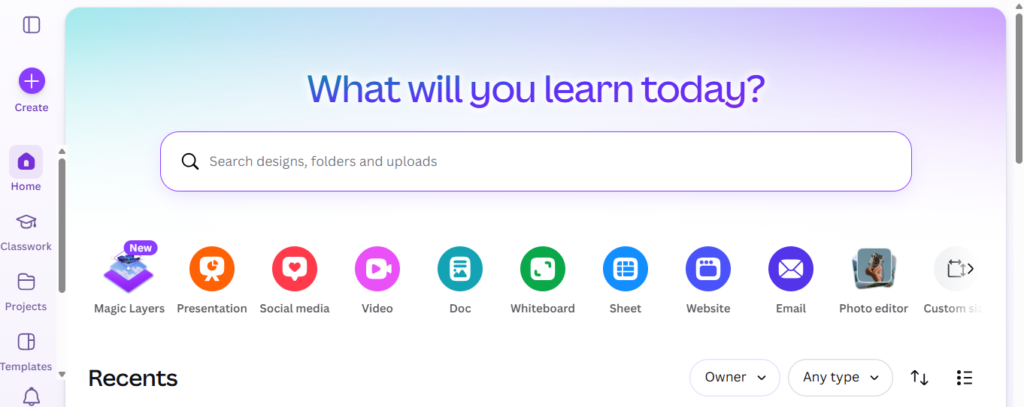
AI-powered capabilities are also incorporated into Canva’s design platform.
Users can produce material, alter designs, produce photos, and speed up creative operations using its AI capabilities.
Also Read: Canva Review 2026: Features, Pricing, Pros & Cons | Best AI Design Tool?
What Can Canva Do for Marketing?
Small business can uses Canva to create:
- Instagram posts
- Facebook graphics
- LinkedIn graphics
- YouTube thumbnails
- Promotional flyers
- Business presentations
- Posters
- Brochures
- Advertisements
- Infographics
- Blog graphics
- Product marketing visuals
Although certain advanced AI and premium features require a paid membership, Canva’s free plan offers access to a huge library of templates and design resources.
Why Canva Is Useful for Small Businesses
For contemporary marketing, visual material is crucial.
For a new menu, a restaurant may require promotional graphics.
Social media posts about properties might be necessary for a real estate agent.
Product ads may be necessary for an online retailer.
Professional LinkedIn graphics could be made by a consultant.
Canva offers templates that may be altered to fit a business’s branding rather than creating everything from scratch.
Example:
Consider a tiny coffee shop that is starting a promotion for the weekend.
The owner can choose a social media template, add the promotion, upload a picture of the product, use the brand’s colors and logo, and post the final image.
The creative process can be accelerated even more by AI-powered features.
Pros and Cons
| Beginner-friendly | Some advanced features are paid |
| Large template library | Free users have fewer AI and premium resources |
| Useful for social media | Templates can look generic without customization |
| Ai-assisted design features | |
| Excellent for non-designers |
Note: Its best for Social Media Designs, Graphic Design, Advertisements, Branded Marketing Content.
3. HubSpot – Best Free AI Marketing Tool for CRM and Lead Management
Small businesses that need to handle leads and customer interactions may find HubSpot especially helpful.
CRM, marketing, sales, customer support, content, and AI-powered services are all part of its ecosystem.
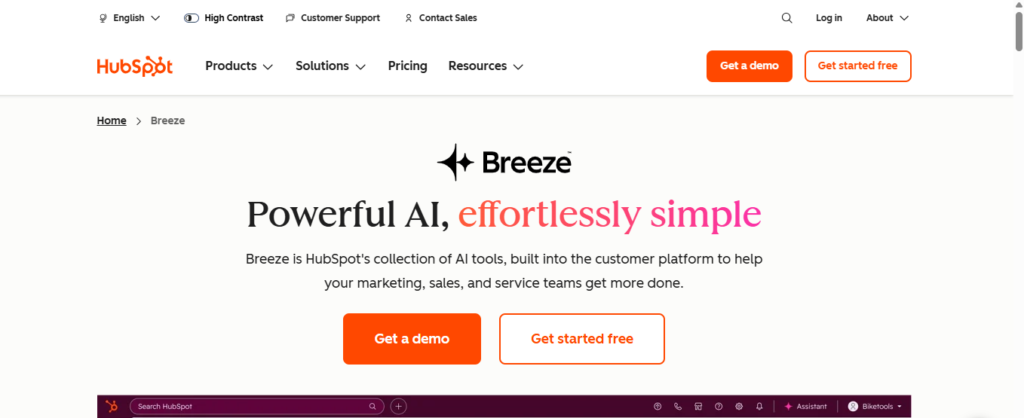
Additionally, HubSpot offers free tools that assist companies with content creation, contact management, form creation, prospect communication, and customer data organization.
AI solutions from HubSpot can help with various marketing operations, including content creation.
What Can Small Businesses Use HubSpot For?
Depending on available free features and account limits, businesses can use HubSpot for tasks such as:
- Managing customer contacts
- Tracking leads
- Creating forms
- Live chat
- Email marketing
- Content creation
- Website-related marketing
- Customer communication
- Sales pipeline management
- Marketing organization
HubSpot describes its AI capabilities as helping businesses create content and support customer-facing workflows.
Why HubSpot Matters
Dispersed consumer data is one of the main issues facing expanding companies.
Spreadsheets, email inboxes, messaging applications, and social media can all include leads for a firm.
Important client data can be consolidated into a single, well-organized system using a CRM.
For instance, HubSpot can be used by a web design firm to monitor:
- Website visitors who submit a form
- Potential customers
- Sales conversations
- Follow-ups
- Deals
- Existing customers
AI can then help with certain content and productivity tasks.
Pros and Cons
| Powerful CRM capabilities | The platform can feel complex for beginners |
| Useful free tools | Advanced automation and marketing features may require paid plans |
| AI-assisted content features | Businesses may need time to learn the ecosystem |
| Lead management | |
| Suitable for growing businesses | |
| Combines several marketing functions |
Note: It is best for Lead generation, CRM, customer management, and businesses planning to scale.
4. Mailchimp – Best Free AI Marketing Tool for Email Marketing
For small businesses, email marketing is still one of the most effective digital marketing strategies.
Although its contact, sending, and feature limits are subject to change, Mailchimp is a well-known email marketing software with a free tier.
Marketers may enhance email generation and campaign workflows with its AI-assisted features.
What Can Mailchimp Do?
Small businesses can use email marketing platforms such as Mailchimp to:
- Build email campaigns
- Create newsletters
- Manage subscribers
- Develop customer segments
- Send promotional messages
- Create signup forms
- Monitor campaign performance
- Test different marketing approaches
AI can help with areas such as subject lines, content suggestions, and campaign creation.
Why Email Marketing Matters
Although social media channels are helpful, businesses do not have total control over their reach.
A direct line of communication with clients who have willingly registered is offered by an email list.
An online clothes retailer, for instance, can gather email addresses and send:
- New product announcements
- Discount codes
- Seasonal promotions
- Abandoned-cart messages
- Helpful buying guides
- Customer newsletters
A local restaurant could use email to announce new menus, special events, or weekend offers.
Example AI Workflow
An AI assistant could be asked by a small business to come up with five ideas for email subject lines.
After that, the marketer can test various strategies and keep an eye on clicks and open rates.
AI speeds up the creation process rather than taking the place of marketing strategy.
Pros and Cons
| Pros | Cons |
|---|---|
| Strong email marketing capabilities | Free-plan limits apply |
| Useful for newsletters | Advanced automation may require payment |
| Contact management | Businesses with larger lists may quickly outgrow the free tier |
| Campaign analytics | |
| AI-assisted content features |
Note: It is use for Email newsletters, promotions, customer retention, and email-based lead nurturing.
5. Buffer – Best Free AI Tool for Social Media Marketing
Marketing on social media might take a lot of time.
Maintaining Facebook, Instagram, LinkedIn, X, TikTok, and other channels may be necessary for a small business.
With a single platform, Buffer assists companies in planning and scheduling social media content.
Additionally, its AI capabilities can help create and enhance social media content.
What Can Buffer Do?
Buffer can help businesses:
- Schedule social media posts
- Organize content calendars
- Manage multiple social accounts
- Create social captions
- Repurpose content
- Maintain a consistent publishing schedule
- Analyze social performance
The free plan has limitations on the number of channels and queued posts, but it can still be useful for small businesses beginning their social media strategy.
Why Scheduling Matters
One of the main issues facing small businesses is consistency.
A business owner may post five times in a single week before going three weeks without posting.
A portion of this issue is resolved by scheduling.
For instance, a nearby gym could get ready:
- Monday: Workout tip
- Tuesday: Customer success story
- Wednesday: Educational post
- Thursday: Trainer advice
- Friday: Promotional offer
It is possible to plan and prepare these postings ahead of time.
AI can assist in coming up with caption ideas, but each post should be reviewed by the company before being published.
Pros and Cons
| Pros | Cons |
|---|---|
| Easy social media scheduling | Free plan has channel and scheduling limits |
| Useful for small teams | Advanced analytics may require a paid subscription |
| AI-assisted content creation | AI-generated captions still need brand customization |
| Helps maintain consistency | |
| Centralized content calendar |
Note: It is best for Social media scheduling, content planning, and maintaining consistent publishing.
6. Google Analytics – Best Free Tool for AI-Assisted Marketing Insights
Only half of the work is producing marketing content.
A company must also assess the effectiveness of its marketing.
Businesses may measure website activity, user behavior, traffic sources, conversions, and other performance data with Google Analytics, a free analytics tool.
Automated and AI-assisted insights are becoming more and more common in modern analytics to assist users in finding patterns and trends in their data.
What Can Businesses Measure?
Google Analytics can help businesses understand:
- How many people visit their website
- Where visitors come from
- Which pages attract traffic
- How users navigate the website
- Which marketing channels generate visitors
- Which pages lead to conversions
- How campaigns perform
- What content attracts customers
For example, an online store may discover that organic search brings more visitors than social media.
Another business might discover that visitors from a particular campaign spend more time on its website.
These insights can influence future marketing decisions.
Why Analytics Is Essential
Marketing is reduced to guesswork in the absence of analytics.
Let’s say a company posts on social media for several weeks but gets very little traffic to its website.
Analytics can be used to ascertain whether social media is genuinely increasing website traffic.
In a similar vein, the company can look into its calls to action, landing pages, and conversion process if a blog post has thousands of views but generates few leads.
Pros and Cons
| Pros | Cons |
|---|---|
| Free analytics platform | Can be difficult for beginners |
| Powerful reporting | Requires correct setup |
| Traffic and conversion measurement | Data needs interpretation |
| Useful for SEO and content marketing | It is an analytics platform rather than a complete AI marketing suite |
| Helps businesses make data-driven decisions |
Note: It is best for Marketing measurement, website analytics, conversion tracking, and data-driven decision-making.
Quick Comparison: 6 Free AI Marketing Tools
| Tool | Best For | AI Marketing Use | Free Option |
|---|
| ChatGPT | Content & ideas | Writing, brainstorming, strategy | Yes |
| Canva | Graphic design | AI-assisted creative content | Yes |
| HubSpot | CRM & leads | AI content and customer workflows | Yes |
| Mailchimp | Email marketing | Email content assistance | Yes |
| Buffer | Social media | AI-assisted captions and scheduling | Yes |
| Google Analytics | Analytics | Automated/AI-assisted insights | Yes |
Free-plan features, limits, and AI capabilities can change, so businesses should verify current terms before building a workflow around a specific feature.
Conclusion
The task at hand will determine which free AI marketing tool is suitable for small businesses.
The best all-around choice for content and marketing concepts is ChatGPT. For graphic marketing, Canva is a great option. When it comes to lead management and CRM, HubSpot is unique. Buffer assists companies in keeping a steady social media presence, while Mailchimp is helpful for email advertising. The measurement layer required to determine whether those marketing initiatives are yielding results is provided by Google Analytics.
Small businesses can mix two or three free platforms instead of picking one and expecting it to do everything.
For instance, ChatGPT + Canva + Buffer can produce an effective, inexpensive social media workflow. HubSpot might be added by companies that prioritize lead generation, and Mailchimp could be added by companies that prioritize client retention.
The most crucial lesson is that marketing strategy cannot be replaced by AI. It multiplies productivity.
Without instantly boosting their marketing budget, small firms can achieve significantly more by combining AI techniques with good positioning, helpful content, genuine communication, and constant measurement.
Frequently Asked Questions
What is the best free AI marketing tool for small businesses?
There is no single best tool for every business. ChatGPT is one of the most versatile choices for content and marketing ideas, while Canva is better for design, HubSpot for CRM, Mailchimp for email, Buffer for social media scheduling, and Google Analytics for measuring results.
Are free AI marketing tools really free?
Many of the tools discussed in this article provide free plans, but free plans usually have limitations on usage, contacts, channels, AI features, storage, automation, or other capabilities. Businesses should check the current plan details before relying on a specific feature.
Can AI replace a small business marketing team?
AI can automate and accelerate many marketing tasks, but it should not completely replace human marketing expertise. Strategy, brand positioning, customer relationships, creativity, fact-checking, and final decision-making still benefit significantly from human involvement.
Which free AI tool is best for writing marketing content?
ChatGPT is a strong general-purpose option for creating marketing drafts, brainstorming ideas, developing content calendars, writing social media posts, and generating copy. HubSpot also provides AI-powered content creation features for marketers.
Which free AI tool is best for social media?
Canva and Buffer work particularly well together. Canva can help create visual content, while Buffer can help schedule and manage social media publishing.
Can small businesses use AI for email marketing?
Yes. Tools such as Mailchimp can help small businesses create and manage email campaigns, while AI can assist with subject lines, content ideas, and other parts of the email creation process.
Do I need to use all six tools?
No. Start with the tools that solve your biggest problem. A content-focused business may begin with ChatGPT and Canva, while a lead-generation business may prioritize HubSpot and Google Analytics.
Is AI-generated marketing content good for SEO?
AI can help with research, brainstorming, outlining, editing, and content production, but simply generating large amounts of AI content does not guarantee search visibility. Successful SEO content should provide original value, satisfy search intent, demonstrate expertise, be accurate, and be useful to readers.
When should a small business start paying for AI marketing software?
Upgrade when a free-plan limitation is directly affecting your growth or productivity. For example, you may need a paid plan when you have more contacts, require advanced automation, manage multiple team members, need additional social channels, or require higher AI usage.

4 Comments